
Under the Threshold on Monday. #1 in the Quadrant by Friday.
Amplitude had the product to back it up. They just needed the reviews to prove it, and the window to rank was closing fast.
Infotech's rankings are built entirely from customer reviews. No analyst scoring, no relationship advantage. When Infotech reached out to Amplitude in March, they were still under the minimum threshold to rank competitively
Captivate Collective (A Spotlight Company) moved fast. In one week, they sourced 12 reviews, doubling Amplitude's total review count and clearing the threshold. A targeted campaign identified the right customers, matched the message to the moment, and got reviews in the door before the window closed.
Amplitude finished #1.
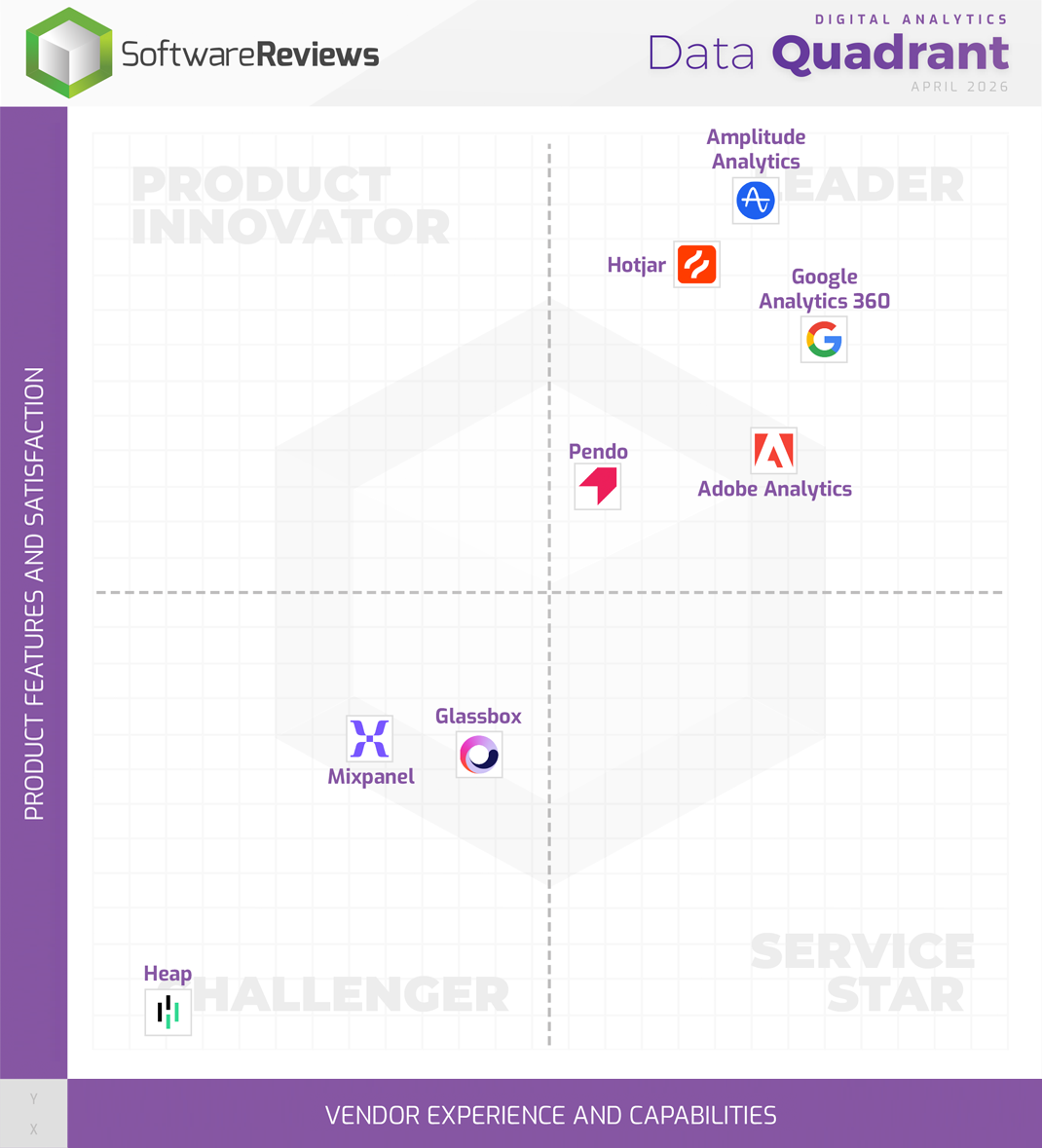
That result didn't come from a bigger list or a louder email. It came from someone paying close enough attention to spot the window, move quickly, and treat every review as a real opportunity rather than a routine send.
Precision Advocacy: The Right Customer at the Right Moment
The Infotech win was a sprint. The broader program is a system.
Amplitude's advocacy program had been running on volume: reach as many eligible customers as possible and hope enough of them write a review. It generated activity. It didn't generate compounding results.
What changed the trajectory was precision, and an unexpected tool to deliver it. We built the targeting logic using Amplitude's own cohort tool, a product built for user insight, and repurposed to find the right customer voice. Where Amplitude's customers used cohorts to analyze user behavior inside the product, Spotlight used them to identify the right advocates at the right time.
The result was a tighter, smarter audience: habitual users who logged in consistently, hit meaningful product thresholds, and showed up in the data as genuinely engaged. The subsequent campaign logic built on those same learnings: rolling 30-day windows, 60-day exclusion periods, and continuous A/B testing of subject lines and copy.
Review volume per campaign doubled. Amplitude had a program that got smarter every cycle.
The Other 3000+ Reviews. Almost Nobody Was Reading Them.
Zooming out beyond just the Infotech reviews, Amplitude had 3000+ G2 reviews sitting in the program. Detailed, specific, written by real customers describing real outcomes. Competitors mentioned. Use cases explained. The language customers actually use to describe Amplitude's value, in volume, is indexed and searchable.
Then the market shifted. LLMs started surfacing peer reviews in AI-generated answers. Analysts began citing them. Buyers were reading them earlier in their evaluation process. Reviews weren't just a ranking input anymore. They were a direct line into how the market understood Amplitude.
The question became: what if we treated all of this as a content engine?
Turning Reviews Into a Strategic Asset
Amplitude now has a live corpus of customer proof, across Infotech, G2, and beyond, that feeds every part of the business.
Competitive intelligence. Amplitude's sales and marketing teams have a detailed map of why customers switched from key competitors, built directly from 3000+ reviews. The language customers use, what they gained, and which competitors they left behind, all of it is available without a single customer interview.
Richer reviews. Amplitude's customers now write better reviews because they're coached on what future buyers actually find useful. Reviews come back longer, more specific, and more usable as sales and marketing assets.
Before:

After:

A live proof feed. Every Monday, the strongest reviews of the week land in an internal Amplitude Slack channel, evaluated for credibility, specificity, and quotability. Sales, marketing, and leadership have customer proof on demand, ready to activate immediately.
Content. Published blog posts, ghostwritten thought leadership, and persona-based content pieces are now grounded in the actual language Amplitude's customers use, sourced directly from the review corpus.
Each piece compounds the next. Better targeting produces more engaged reviewers. More engaged reviewers write more useful reviews. More useful reviews feed better intelligence. Better intelligence improves the targeting.
What Are You Leaving on the Table?
Most companies treat review generation as a rankings exercise. Run a campaign, watch the numbers, report the badge.
Amplitude treats it as a customer proof engine. The reviews they generate today are feeding sales conversations, shaping analyst narratives, getting indexed by LLMs, and showing up in the content their marketing team publishes, all from the same source.
The Infotech story shows what's possible when someone is paying attention. The precision advocacy program shows what compounds over time. But the bigger opportunity is what happens after the reviews come in.
If you're running a review program and the output is a ranking, you're leaving most of the value behind.